Apivar Treatment & Hive Consolidation: Our Late Summer Management
Starting Our Varroa Mite Treatment Protocol
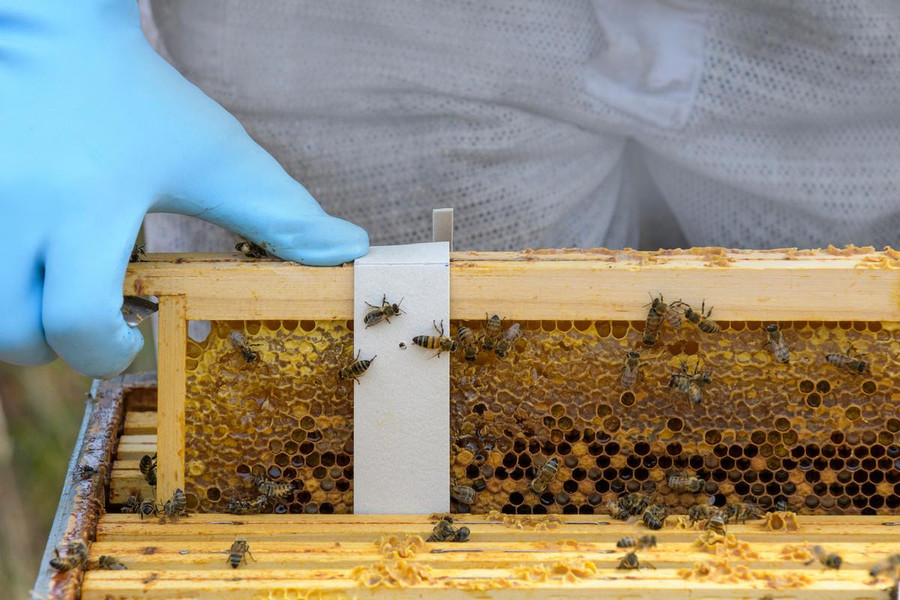
Today marks an important milestone in our beekeeping calendar – we’ve successfully placed Apivar strips in all our hives as part of our integrated pest management strategy. With Varroa mites being one of the most significant threats to honeybee colonies, proper treatment timing is crucial for colony health heading into winter.
Treatment Timeline & Schedule
📅 Treatment Started: August 30th, 2025
📅 Removal Date: October 3rd, 2025 (6 weeks total)
📅 Follow-up Treatment: Oxalic acid application in winter
Why 6 weeks? Apivar strips require a full 42-56 day treatment period to be effective against both adult Varroa mites and those in capped brood cells. This timing ensures we catch multiple generations of mites throughout their reproduction cycle.
The Great Hive Consolidation Challenge
Alongside our Varroa treatment, we’re undertaking the ambitious project of consolidating our two bee yards into one. This process has proven to be more challenging than initially anticipated!
The “3-Foot Rule” Dilemma
As any experienced beekeeper knows, there are essentially two options for moving hives:
- Short moves: 3 feet at a time (to prevent disorientation)
- Long moves: 3+ miles away for 2-3 weeks, then to final location
We initially chose the gradual approach, moving hives 3 feet daily. However, this method is proving to be:
- ⏰ Time-consuming - requiring daily attention
- 🌧️ Weather-dependent - can’t move in rainy conditions
- 📐 Logistically complex - tracking multiple hive positions and ideally keeping the workers from one out of the other hives
Lessons Learned
For future hive relocations, we’re planning to use the 3-mile method:
- Move hives 3+ miles away from both original and target locations
- Leave for 2-3 weeks to reset their orientation
- Move directly to final position in one go
This approach requires more initial effort but eliminates the daily management overhead.
Winter Preparation Strategy
Our comprehensive winter prep includes:
Phase 1: Apivar Treatment (Current)
- ✅ Strips placed in all hives
- 🔄 Monitoring for proper placement and effectiveness
- 📊 Documenting mite drop counts
Phase 2: Post-Treatment Assessment (October)
- Remove Apivar strips after 6 weeks
- Conduct alcohol wash or sticky board counts
- Assess treatment effectiveness
Phase 3: Winter Treatment (December/January)
- Oxalic acid application during broodless period
- Target residual mites missed by Apivar
- Final mite management before spring buildup
Managing Treatment During Hive Moves
Combining Varroa treatment with hive relocation presents unique challenges:
- Strips must remain properly positioned during moves
- Stress from moving could affect treatment efficacy
- Increased inspections needed to monitor both factors
We’re carefully tracking each hive’s response to ensure neither process compromises the other.
This treatment protocol is part of our integrated approach to sustainable beekeeping. Stay tuned for updates on treatment effectiveness and our consolidation progress!